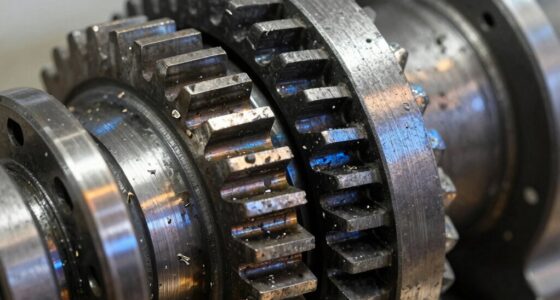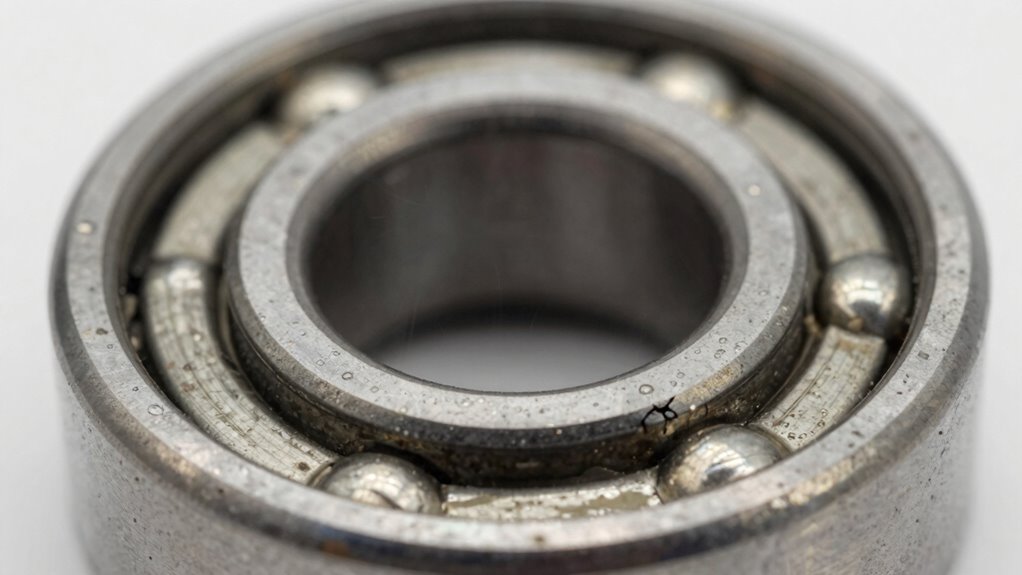

Before catastrophic noise occurs, you’ll notice early signs like lubrication deterioration, which reduces cushioning and increases metal contact. Temperature fluctuations, either overheating or sudden drops, indicate issues. You might also feel subtle changes in vibration or hear quiet noises, signaling uneven wear. If ignored, these signs escalate into louder grinding or squealing. Recognizing these gradual shifts helps you prevent sudden failures—stay tuned to understand how each stage progresses to this critical point.

Get business pricing on garage and car supplies
- Business-only prices and quantity discounts
- Tax-exempt purchasing
- Multiple users, one account, clear invoices
Key Takeaways
- Lubrication degrades, leading to increased metal contact and abnormal operational noises.
- Temperature fluctuations indicate overheating or moisture buildup, often preceding loud failures.
- Vibration and noise levels gradually rise as bearing components wear unevenly.
- Early signs include changes in lubricant appearance and subtle, unusual sounds.
- Regular monitoring of lubrication, temperature, and vibration helps detect issues before catastrophic failure.
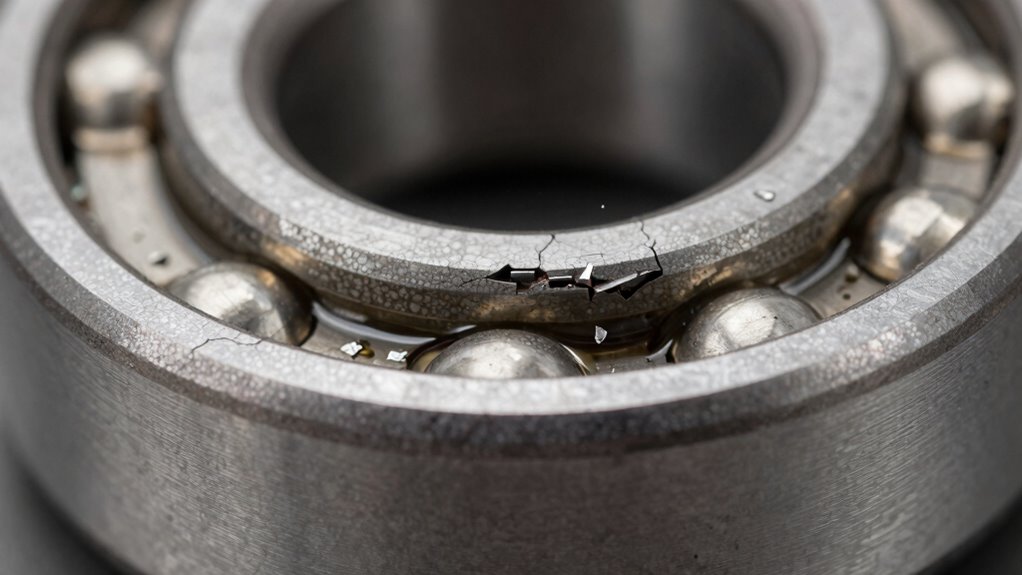
Understanding the bearing failure timeline is essential for preventing costly equipment downtime and repairs. One of the earliest signs you should watch for is lubrication degradation. Over time, lubricant can break down due to contamination, oxidation, or simply due to prolonged use, reducing its effectiveness. When lubrication quality diminishes, it can’t adequately cushion the rolling elements or prevent metal-to-metal contact. This increased friction accelerates wear and generates heat, which can compound the problem. If you notice any change in the lubricant’s appearance or hear unusual noises during operation, it’s a sign that the bearing is beginning to deteriorate. Regular lubrication checks and timely replacements are crucial to extend bearing lifespan and avoid sudden failures. Additionally, monitoring thermal performance can help detect early signs of overheating that precede failure.
Temperature fluctuations also play a critical role in the early stages of bearing failure. Bearings are designed to operate within a specific temperature range; deviations often indicate underlying issues. When a bearing experiences uneven or excessive heating, it can cause the lubricant to break down faster, further exacerbating lubrication degradation. Conversely, sudden drops in temperature can lead to the formation of condensation or moisture inside the bearing, which promotes corrosion and undermines the integrity of the rolling elements. These temperature changes often happen gradually but can sometimes be abrupt, especially if there’s a problem with cooling systems or improper installation. Monitoring temperature regularly allows you to identify abnormal patterns early, giving you a chance to intervene before more severe damage occurs.
As these early signs develop, you might also notice subtle changes in vibration or noise levels that seem insignificant at first. These are precursors to more catastrophic sounds, such as grinding or squealing, which indicate that the bearing is nearing failure. When lubrication is compromised or temperature fluctuations become extreme, the bearing’s components start to wear unevenly, leading to increased vibrations. If ignored, this can escalate rapidly into a loud, unmistakable noise that signals imminent failure. Recognizing these early changes is key. By establishing routine inspections and using condition monitoring tools, you can detect lubrication degradation and temperature anomalies before they cause catastrophic damage. This proactive approach not only saves you money but also maximizes equipment uptime, ensuring your operations run smoothly and efficiently.
As an affiliate, we earn on qualifying purchases.
Frequently Asked Questions
Can Early Bearing Signs Be Completely Silent?
Yes, early bearing signs can be completely silent, making silent signals tricky to detect. While you might not notice any noise, vibration analysis can reveal subtle changes indicating wear or damage. Regular monitoring with vibration sensors helps you catch these silent signals early, preventing catastrophic failure. Don’t rely solely on noise; proactive vibration analysis gives you the insight needed to maintain bearing health and avoid unexpected breakdowns.
How Long Before a Bearing Failure Becomes Audible?
In a typical case, you might notice a bearing failure becoming audible within a few hours to a day after subtle signs appear. For example, vibration analysis and temperature monitoring can detect early issues, but the noise may only become noticeable as the damage progresses. Regularly checking these parameters helps you catch failures before they produce loud, disruptive sounds, giving you time to plan maintenance.
Are There Specific Industries More Prone to Silent Failures?
You’ll find that industries like aerospace, medical equipment, and high-precision manufacturing are more prone to silent failures, often due to stricter industry standards and failure statistics. These sectors prioritize early detection to prevent catastrophic damage, so they implement advanced monitoring systems. Silent failures can go unnoticed longer in these industries, making proactive maintenance essential. Regular inspections and vibration analysis help identify issues before they become audible or cause significant damage.
What Tools Can Detect Pre-Failure Bearing Changes?
You can detect pre-failure bearing changes using tools like vibration analysis and thermal imaging. Vibration analysis helps you spot abnormal patterns indicating early wear or imbalance before noise becomes noticeable. Thermal imaging reveals hotspots caused by increased friction or overheating, signaling potential failures. Regularly using these tools allows you to catch issues early, preventing costly breakdowns and ensuring machinery runs smoothly.
How Does Lubrication Impact Failure Detection Timing?
Lubrication impacts failure detection timing by maintaining lubrication effectiveness and preventing oil contamination, which can hide early warning signs. Proper lubrication ensures smooth bearing operation, making it easier to spot anomalies through vibration or temperature changes. If lubrication is inadequate or contaminated, early signs may be masked, delaying detection. Regular monitoring of lubrication quality helps you identify issues sooner, reducing the risk of sudden catastrophic failure.
bearing temperature monitoring sensor
As an affiliate, we earn on qualifying purchases.
As an affiliate, we earn on qualifying purchases.
Conclusion
Understanding the bearing failure timeline is like reading a ghost’s whisper—subtle signs that hint at chaos to come. By paying close attention to changes in noise, vibrations, or temperature, you can catch trouble early and prevent disaster. Don’t ignore these warning signals; they’re your first line of defense. Stay vigilant, listen carefully, and act swiftly. After all, catching the warning signs early keeps your machinery running smoothly and your peace of mind intact.
vibration analysis tool for bearings
As an affiliate, we earn on qualifying purchases.
As an affiliate, we earn on qualifying purchases.
As an affiliate, we earn on qualifying purchases.
Fall Picks
fall essentials
As an affiliate, we earn on qualifying purchases.