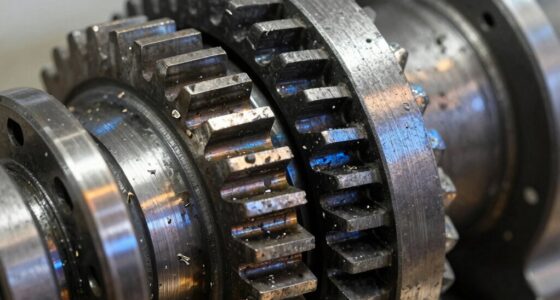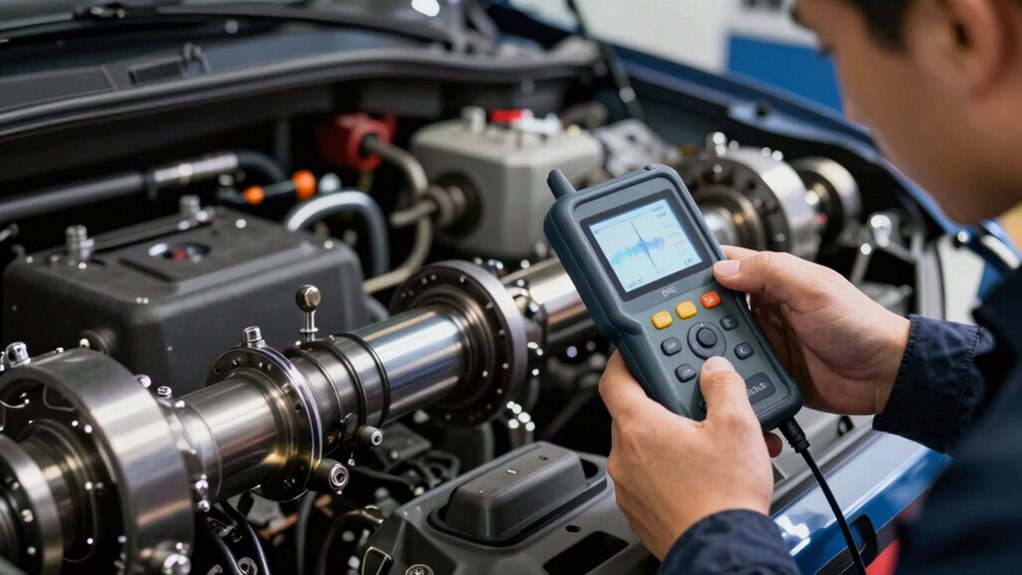
To diagnose driveline vibration with a simple frequency approach, start by using a vibration analyzer or smartphone app to measure the vibrations as you drive. High-frequency vibrations typically indicate drive shaft imbalance, while lower or shifting frequencies point to tire issues. By analyzing the specific frequency patterns, you can quickly identify the root cause. Keep going to discover how to interpret these signals and apply effective solutions.

Get business pricing on garage and car supplies
- Business-only prices and quantity discounts
- Tax-exempt purchasing
- Multiple users, one account, clear invoices
Key Takeaways
- Measure vibration frequencies using tools like analyzers or smartphone apps to identify imbalance or tire issues.
- High-frequency vibrations that increase with speed typically indicate drive shaft imbalance.
- Lower or shifting frequency vibrations suggest tire irregularities or deformities.
- Rotating tires or wheels helps determine if tire problems are causing vibrations.
- Combining frequency analysis with visual inspection ensures accurate diagnosis and targeted repairs.
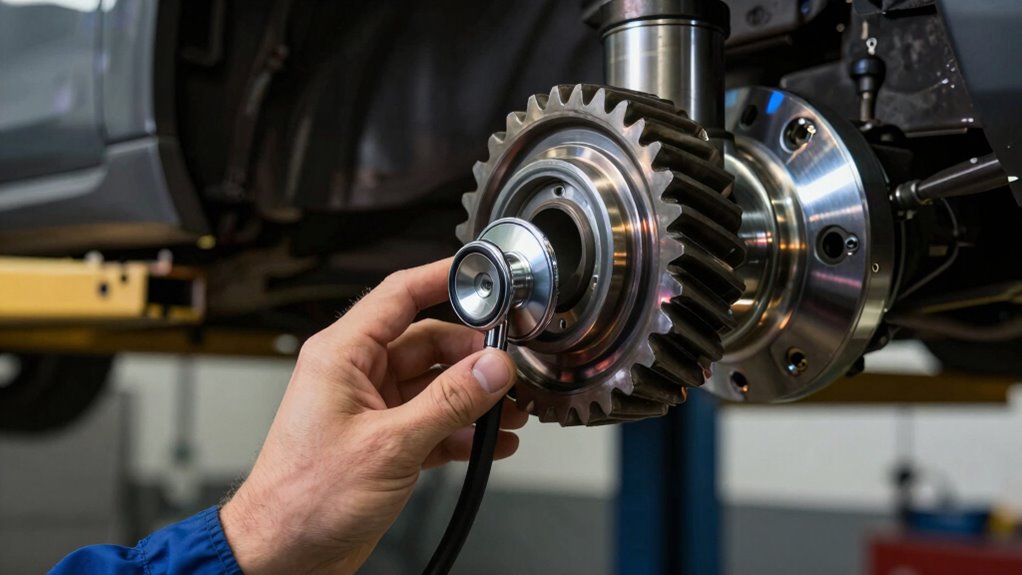
Driveline vibration can be a frustrating issue that affects your vehicle’s performance and comfort. When you notice shaking or shuddering while driving, it’s often related to problems with the drive shaft imbalance or tire uniformity. These issues create vibrations that travel through the drivetrain, making your ride uncomfortable and potentially leading to more serious damage if left unaddressed. The good news is that many of these problems can be diagnosed using a simple frequency approach, which helps pinpoint the root cause without extensive, costly repairs.
Driveline vibrations often stem from drive shaft imbalance or tire issues, diagnosable through simple frequency analysis.
The first step is understanding how drive shaft imbalance contributes to driveline vibration. When your drive shaft isn’t perfectly balanced, it causes uneven rotation, which results in vibrations that can be felt throughout the vehicle. These vibrations typically occur at specific frequencies that correspond to the imbalance’s severity and location. By measuring the frequency of the vibrations, you can determine whether the drive shaft is the culprit. An imbalance often produces a consistent, high-frequency vibration that intensifies as the vehicle accelerates or decelerates. Using a vibration analyzer or even a smartphone app designed for this purpose makes it easier to detect these frequencies and diagnose the imbalance quickly.
Tire uniformity also plays a significant role in driveline vibrations. Even if your drive shaft is perfectly balanced, irregularities in tire shape or tread wear can generate similar vibrations. For example, a tire with uneven wear or slight deformities will create vibrations at specific frequencies as it rotates. These frequencies are often lower than those caused by drive shaft imbalance but can still be identified through frequency analysis. To diagnose tire-related issues, you should check if the vibrations change when you rotate the tires or switch to different wheels. If the vibration shifts with tire rotation, it’s a strong indication that tire uniformity problems are contributing to the issue.
When you combine the frequency approach with visual inspections, you gain a clearer picture of what’s causing the driveline vibration. Look for signs of drive shaft imbalance, like visible wobbling or uneven wear on the drive shaft or its components. Simultaneously, inspect your tires for irregular tread patterns, bulges, or deformities. Once you identify the dominant vibration frequency, you can focus on the most likely source—whether it’s balancing the drive shaft or replacing or repairing tires. This method allows you to address the problem efficiently, saving time and money while restoring a smooth, comfortable ride.
As an affiliate, we earn on qualifying purchases.
Frequently Asked Questions
Can Driveline Vibrations Occur Without Noticeable Noise?
Yes, driveline vibrations can occur without noticeable noise, making noise-free diagnostics essential. You might experience a silent vibration, where the car feels unsteady but no sound alerts you. These silent vibrations often result from issues like imbalance or misalignment that don’t produce noise but still affect ride quality. To detect these, you need to pay close attention to handling and use precise diagnostic tools, since relying on noise alone won’t reveal all problems.
How Do Environmental Factors Influence Vibration Diagnosis Accuracy?
Environmental impact can markedly influence your diagnostic accuracy when identifying driveline vibrations. Factors like temperature, road conditions, and vibrations from nearby machinery can mask or mimic driveline issues, making it harder to pinpoint the root cause. To improve accuracy, you should control or account for these environmental variables during testing, ensuring you interpret vibration data correctly and avoid false diagnoses caused by external influences.
Are There Specific Vehicle Types More Prone to Driveline Vibrations?
Some vehicle types tend to show more vibration susceptibility, especially those with complex driveline setups. Heavy trucks, sports cars, and older models often experience more pronounced vibrations, making diagnosis trickier. These vehicles’ unique components or higher stress levels can amplify driveline issues. If you own such a vehicle, stay attentive to vibration signs, and remember, understanding their specific vibration susceptibility helps you pinpoint problems faster and keep your ride smooth.
What Safety Precautions Should Be Taken During Vibration Testing?
During vibration testing, you should wear appropriate safety equipment like gloves, eye protection, and earplugs to prevent injury. Follow proper testing procedures, guaranteeing the vehicle is securely supported and the area is clear of bystanders. Avoid standing near moving parts, and always disconnect the battery if needed. Regularly inspect tools and equipment for damage, and stay alert to any unusual vibrations or noises during the process to guarantee safety.
How Often Should Driveline Components Be Inspected for Vibration Issues?
You should inspect your driveline components regularly, ideally every 10,000 to 15,000 miles, to catch vibration issues early. Frequency analysis helps determine if vibrations are developing, so paying attention to inspection intervals guarantees you catch problems before they worsen. Regular inspections and monitoring vibration patterns allow you to maintain smooth operation and prevent costly repairs, keeping your vehicle safe and reliable.
smartphone app for vehicle vibration diagnosis
As an affiliate, we earn on qualifying purchases.
As an affiliate, we earn on qualifying purchases.
Conclusion
By applying the simple frequency approach, you can quickly identify driveline vibrations and prevent costly repairs. Remember, “a stitch in time saves nine,” so don’t wait until vibrations become a major issue. With a little knowledge and the right tools, you’re empowered to diagnose issues early and keep your vehicle running smoothly. Stay vigilant, and you’ll turn a tricky problem into a manageable fix before it worsens.
As an affiliate, we earn on qualifying purchases.
As an affiliate, we earn on qualifying purchases.
Evergreen bestsellers Picks
bestsellers
As an affiliate, we earn on qualifying purchases.