
A viscosity shift in used oil analysis often results from shear stress, excessive heat, or contamination. Shear reduces viscosity by breaking molecular bonds, while high temperatures typically lower viscosity but can cause thermal breakdown. Contaminants like dirt, water, or fuel dilute or thickening oil, altering its flow properties. If you want to understand how to identify whether shear, heat, or contamination is causing these changes, continue exploring for detailed guidance.
Key Takeaways
- Sudden viscosity changes with contaminants like water or dirt indicate contamination rather than shear or heat effects.
- Decreased viscosity at high temperatures often results from thermal thinning or additive depletion caused by heat.
- Viscosity reduction alongside metal debris suggests shear stress and mechanical breakdown of oil molecules.
- Consistent viscosity shifts over time, with no contamination signs, may point to additive depletion or formulation issues.
- Combining viscosity analysis with contamination checks and operating conditions helps distinguish between shear, heat, or contamination causes.

MOLUCKFU Engine Oil Comparator Tool and Transmission Oil Viscosity Tester Acrylic Stand for Accurate Car Maintenance and Quality Testing
Versatile functionality: not only compares engine oil but also tests the viscosity of transmission oil, providing comprehensive oil…
As an affiliate, we earn on qualifying purchases.
As an affiliate, we earn on qualifying purchases.
What Causes Viscosity Changes in Used Oil Analysis?

Viscosity changes in used oil analysis often stem from the oil’s exposure to high temperatures, contamination, and additive depletion. Your lubricant formulation plays a vital role, as specific base oils and viscosity modifiers determine how well the oil maintains its properties over time. When exposed to heat, oil additive effects can alter viscosity, either thinning or thickening the oil. Additives like viscosity index improvers help stabilize viscosity, but once depleted, the oil becomes more susceptible to shifts. Contaminants such as dirt, fuel, or water can also impact viscosity by changing the oil’s composition. Understanding how lubricant formulation and oil additive effects interact is essential for evaluating the causes behind viscosity changes and ensuring your engine stays properly lubricated.

Oil Analysis Premier Kit by Under My Hood with return postage included
NOT FOR USE ON AIRCRAFT!
As an affiliate, we earn on qualifying purchases.
As an affiliate, we earn on qualifying purchases.
How Does Shear Stress Affect Your Engine Oil’s Viscosity?
When shear stress acts on your engine oil, it can cause a reduction in viscosity, making the oil thinner and less effective at lubing parts. This shear-induced change can compromise oil film stability, increasing wear and friction. Understanding how shear impacts your oil helps you better manage engine health and performance. Additionally, Free Floating conditions in the engine can lead to unpredictable viscosity shifts, further complicating lubrication efficiency. Recognizing the influence of engine load on shear stress can help prevent unexpected viscosity changes and protect engine components. Monitoring performance cookies related to engine operation can also assist in early detection of viscosity-related issues. Moreover, AI-powered diagnostics can enhance the monitoring of viscosity fluctuations, enabling more precise maintenance strategies. Being aware of hydrodynamic lubrication principles can help anticipate how shear forces affect oil performance under different operating conditions.
Shear-Induced Viscosity Reduction
Shear stress directly impacts your engine oil’s viscosity by causing it to thin under intense or prolonged shear forces. This shear-induced viscosity reduction results from the breakdown of the oil’s molecular structure, especially in formulations with specific additive interactions. The lubricant formulation plays a pivotal role, as some additives are more susceptible to shear thinning than others. High shear rates can disrupt these additives, diminishing their effectiveness and leading to lower viscosity.
| Shear Rate | Effect on Viscosity | Responsible Factors |
|---|---|---|
| Low | Minimal thinning | Stable additive interactions |
| Moderate | Slight viscosity drop | Some additive breakdown |
| High | Significant thinning | Disrupted lubricant formulation |
Understanding these dynamics helps you select oils designed to resist shear thinning.
Oil Film Stability
Shear stress directly challenges the stability of your engine oil’s film, which is essential for maintaining effective lubrication. When shear forces increase, they can break down the oil’s film, risking metal-to-metal contact. Understanding lubrication chemistry and oil formulation helps you grasp how additives and base oils resist shear-induced breakdown. Visualize this process as: 1. The oil film thinning under shear, exposing metal parts. 2. Molecular bonds breaking, compromising viscosity. 3. Contaminants penetrating the weakened film, accelerating wear. Maintaining oil film stability depends on selecting proper formulations that resist shear stress. High-quality oils contain additives designed to reinforce the film, preserving viscosity and preventing breakdown. Recognizing how shear impacts lubrication chemistry guides you in choosing oils that sustain film integrity under demanding engine conditions. Proper formulation plays a crucial role in enhancing oil resilience to shear forces, ensuring consistent viscosity and optimal engine protection.
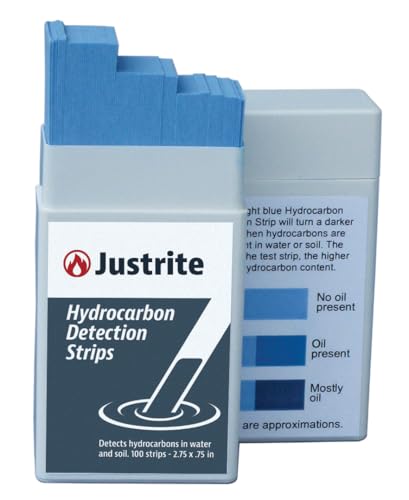
Justrite Hydrocarbon Test Strips for Oil and Water, 2.75" x 0.75" Instant Results, Pack of 100, Blue, 26486
Instant Results – Our oil tester strips change from light blue to dark blue upon contact with hydrocarbons,…
As an affiliate, we earn on qualifying purchases.
As an affiliate, we earn on qualifying purchases.
How Do Elevated Temperatures Impact Oil Viscosity?
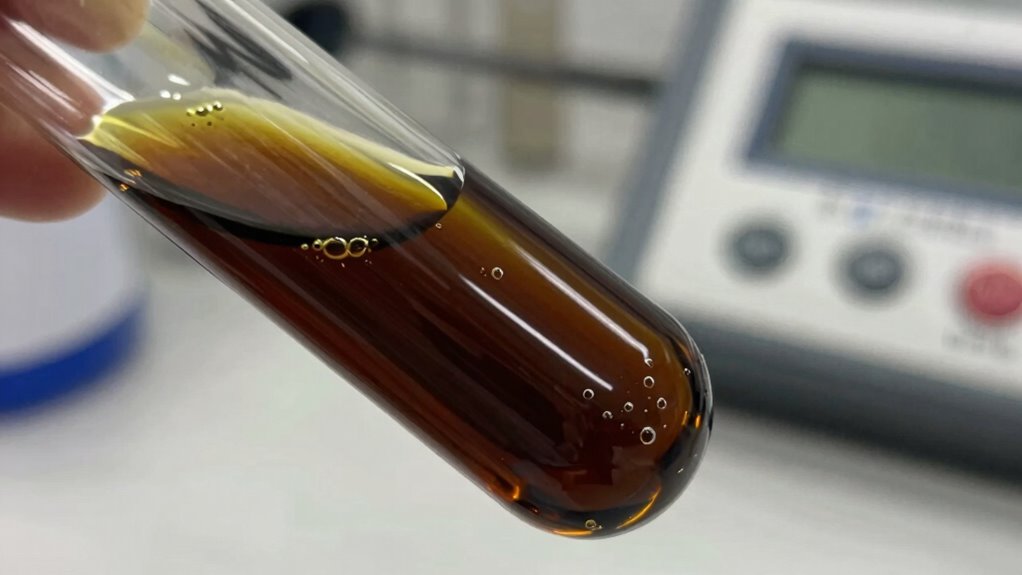
Elevated temperatures cause oil viscosity to decrease, making the lubricant flow more easily. This reduction impacts engine performance and wear, emphasizing the importance of understanding temperature effects. Higher temperatures can accelerate additive effects, altering viscosity more rapidly. The temperature-dependent viscosity of oils is a critical factor in lubricant formulation and performance. Viscosity modeling helps predict these changes, allowing you to adjust formulations accordingly. The following table summarizes temperature influence:
| Temperature Range | Effect on Viscosity | Considerations |
|---|---|---|
| Moderate | Slight decrease, stable lubrication | Regular monitoring |
| High | Significant viscosity drop | Use temperature-sensitive additives |
| Very High | Potential thinning, contamination risk | Rely on viscosity modeling for safety |
Understanding viscosity changes is crucial for ensuring lubricant performance across various operating conditions. Additionally, monitoring oil viscosity helps prevent equipment failure and extend oil life. Recognizing how heat-induced viscosity shifts influence lubricant behavior enables more accurate maintenance planning and performance optimization. Moreover, being aware of the thermal effects on viscosity assists in selecting appropriate lubricants for high-temperature environments.

STP Premium Small Engine 4 Cycle Oil Formula, SAE10W-30 Small Engine Oil Engine Care Formula Reduces Wear for Lawnmower, Push Mower, Tractor, 32 Oz, STP
SAE 10W-30 MOTOR OIL FOR SMALL ENGINES: One 32 fl oz bottle of STP Premium Synthetic Blend 4…
As an affiliate, we earn on qualifying purchases.
As an affiliate, we earn on qualifying purchases.
What Types of Contamination Can Change Your Oil’s Viscosity?
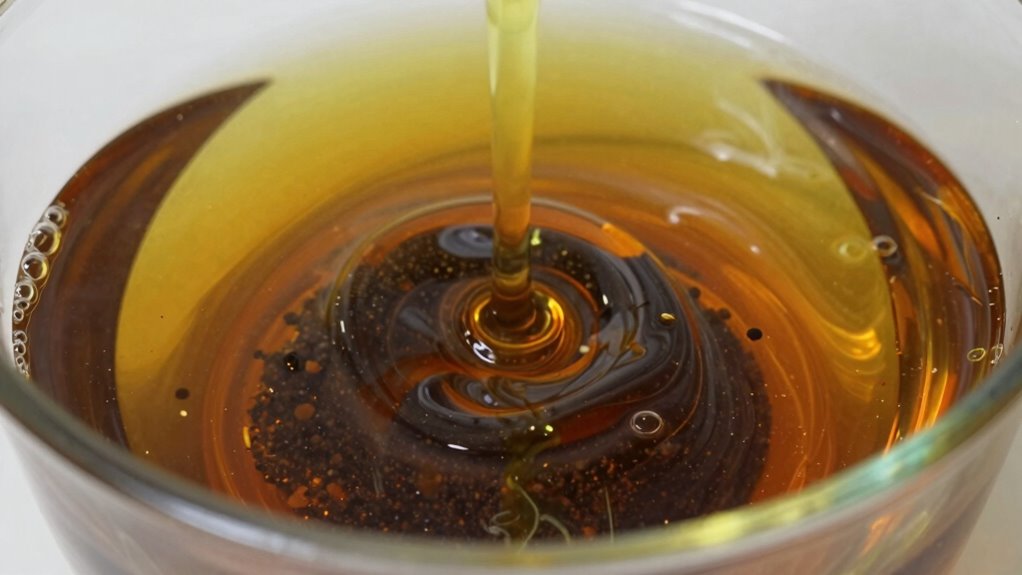
Contamination in your engine oil can significantly alter its viscosity, potentially leading to reduced lubrication efficiency and increased engine wear. Different contamination types, acting as viscosity modifiers, can cause your oil to become either too thick or too thin. Imagine these common culprits:
- Water: It mixes with oil, thinning the viscosity and impairing lubrication. This water contamination can occur from condensation or leaks and must be addressed promptly. Recognizing the signs of water contamination can help prevent serious engine issues.
- Dirt and Debris: Fine particles increase viscosity, making oil thicker and harder to circulate. Proper filtration systems help minimize this type of contamination.
- Fuel Dilution: Fuel leaks into the oil, drastically reducing viscosity and compromising protection. Understanding viscosity modifiers aids in diagnosing and addressing such contamination effectively.
These contaminants interfere with the oil’s ability to maintain proper viscosity, which is essential for engine performance. Recognizing how contamination types impact viscosity helps you monitor oil condition and avoid premature engine damage. Understanding viscosity modifiers is key to diagnosing and preventing these issues effectively.
How Can You Tell If Shear Stress or Heat Is Causing Your Viscosity Shift?

Changes in your engine oil’s viscosity can often be traced back to two main factors: shear stress and heat. Shear stress occurs when the oil’s formulation causes the additive effects to break down under high shear conditions, leading to a thinner or thicker oil than expected. Shear effects can be influenced by oil formulation compatibility, which impacts the oil’s ability to withstand shear forces without degrading. Additionally, the 4K resolution of modern projectors can make subtle color inaccuracies more noticeable, emphasizing the importance of color calibration. Heat, on the other hand, naturally reduces viscosity as the oil warms, but excessive heat can cause thermal breakdown, resulting in an abnormal viscosity shift. To tell the difference, consider operating conditions: persistent viscosity changes during normal operation suggest shear effects, especially if oil formulation is incompatible or additive effects are compromised. If viscosity shifts mainly during high-temperature operation, heat is likely the cause. Monitoring these conditions helps determine whether shear stress or heat is driving your oil’s viscosity change. Additionally, being aware of piercing care and hygiene can help maintain optimal engine performance by preventing contaminants that might affect viscosity. Regularly checking for contaminant buildup can provide further clues about the underlying cause of viscosity changes and help avoid potential engine damage. Employing preventive maintenance practices can further reduce the risk of unexpected viscosity shifts caused by external factors.
What Signs Indicate Oil Contamination in UOA Reports?
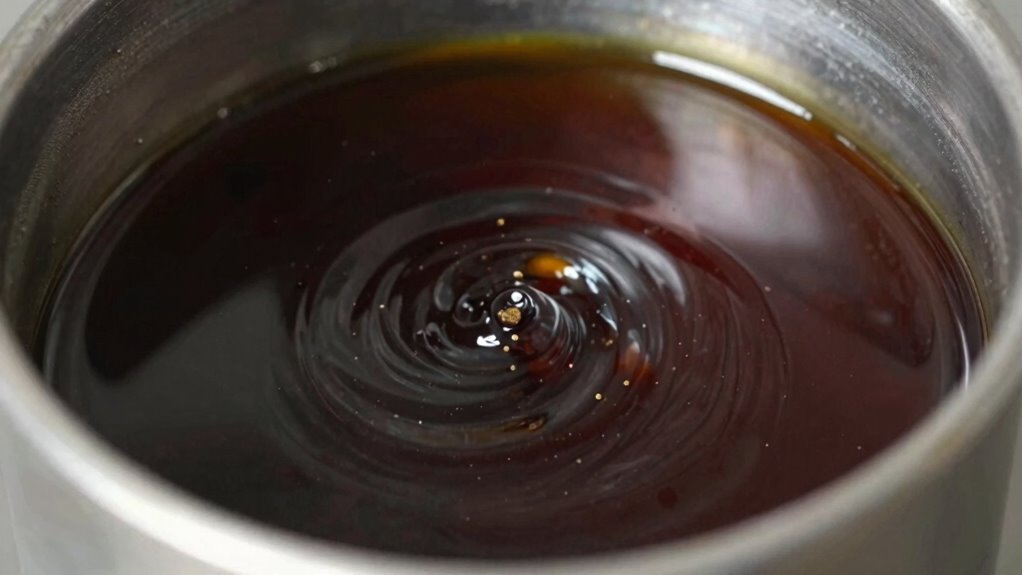
When reviewing your UOA reports, look for signs that oil has been compromised by external substances. Contamination often alters the lubricant formulation, affecting viscosity and additive effects. Common indicators include: 1. Sudden, unexplained increases or decreases in viscosity not aligned with normal wear patterns. 2. Elevated metal particles or debris, suggesting dirt or other contaminants entering the system. 3. Unusual chemical readings, such as high insoluble contaminants, which point to water or dirt ingress affecting additive effectiveness. These signs can stem from contaminated oil or compromised seals and filters. Recognizing these patterns helps you identify when external substances interfere with your oil’s performance, potentially leading to increased engine wear or damage. Regular analysis of these indicators ensures timely intervention and maintenance, including monitoring sound healing practices that can influence overall system health.
How Do Viscosity Trends Help You Assess Engine Health?
Monitoring viscosity trends over time provides valuable insights into your engine’s health. By tracking changes, you can detect early signs of wear, contamination, or lubricant breakdown. Understanding how viscosity shifts relate to lubricant formulation helps you identify whether additives are effective or if the oil is degrading prematurely. Viscosity measurement techniques, such as kinematic and dynamic methods, offer accurate data to assess these trends. A consistent increase may indicate contamination or shear thinning, while a decrease could signal oil thinning from high temperatures or additive depletion. Recognizing these patterns allows you to plan maintenance proactively, preventing costly engine damage. Regular analysis of viscosity trends ensures your engine remains protected, running efficiently, and prolonging its lifespan. Additionally, understanding halal-certified products and their trusted formulations can help ensure the quality and safety of the lubricants used in your engine. Being aware of lubricant degradation processes further enhances your ability to interpret viscosity data accurately, supporting better maintenance decisions. Staying informed about viscosity behavior under different operating conditions helps you make more precise assessments and optimize engine performance. Moreover, considering engine operating conditions such as temperature and load can further refine your interpretation of viscosity changes, leading to more informed maintenance strategies. Recognizing shear effects in lubricants can also assist in diagnosing whether viscosity shifts are due to mechanical shear or other factors.
What Steps Confirm the Cause of a Viscosity Change?
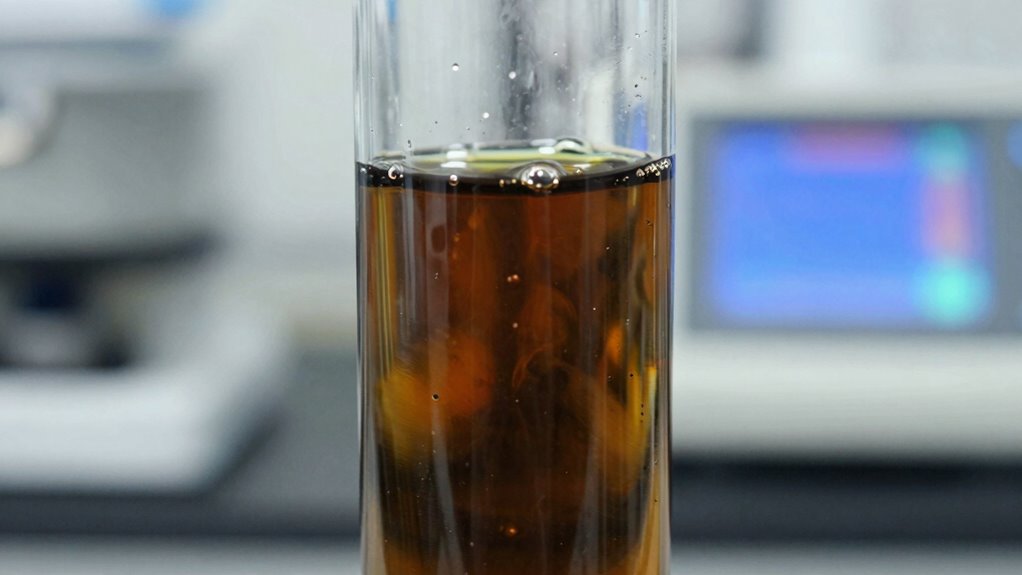
To confirm the cause of a viscosity change, start by checking your oil sample results for contamination or breakdown indicators. Next, inspect the mechanical components for wear or damage that could affect oil performance. Finally, evaluate the operating environment, including temperature and load conditions, to identify external factors influencing viscosity.
Check Oil Sample Results
Checking oil sample results is a critical step in confirming the cause of a viscosity change. You’ll want to analyze the lab data carefully. First, look at the lubricant formulation to see if it matches the original specifications, especially the viscosity modifiers used during manufacturing. Second, examine the presence of contamination, such as water or dirt, which can thin the oil. Third, review the viscosity at different temperatures to identify shear effects or heat-related breakdown. Visualize the sample’s chemical makeup, noting any deviations from normal. Understanding the formulation helps determine if a breakdown occurred naturally or due to external factors. Additionally, analyzing oil degradation processes can provide insights into whether aging or additive depletion contributed to the viscosity shift. Recognizing signs of oxidation or additive depletion can help pinpoint the root cause of the change. Accurate interpretation guides you toward whether the change stems from lubricant aging, shear forces, or contamination.
Inspect Mechanical Conditions
How can you determine if mechanical issues are causing a viscosity change? First, inspect the equipment for signs of mechanical wear, such as scoring, pitting, or abnormal metal debris. Mechanical wear often results in metal particles contaminating the oil, which can alter viscosity. Check the lubrication chemistry by analyzing oil samples for metal content and additives degradation; elevated metal levels suggest wear-related contamination. Examine filters and strainers for trapped debris. If mechanical wear is present, it indicates that components may be deteriorating, leading to abnormal viscosity shifts. Confirming this involves correlating visual inspections with oil analysis results. If wear is extensive, it’s likely the mechanical condition is influencing the viscosity, rather than shear or heat effects alone.
Evaluate Operating Environment
After inspecting the mechanical condition, evaluating the operating environment becomes the next step in pinpointing the cause of viscosity changes. You need to consider factors like temperature fluctuations, contamination, and lubricant formulation. First, monitor operating temperatures—consistent heat can alter viscosity, especially if the lubricant formulation isn’t designed for extreme conditions. Second, check for contamination—dirt, water, or debris can affect viscosity and mask true lubricant performance. Third, review additive effects—certain additives may degrade or settle over time, impacting viscosity. By examining these elements, you can determine if the viscosity shift stems from heat exposure, contamination, or changes in additive chemistry. This thorough assessment helps confirm the real cause and guides proper corrective actions.
How Can You Prevent Unwanted Viscosity Shifts and Extend Oil Life?

Preventing unwanted viscosity shifts and extending oil life begins with proper maintenance practices. Regular oil analysis helps you monitor viscosity changes early, allowing timely interventions. Use high-quality oils with stable oil formulation designed to resist additive degradation, which can cause viscosity loss over time. Keep filters clean and replace them as recommended to prevent contamination that accelerates viscosity issues. Avoid overusing oils beyond their specified change intervals, as prolonged use increases the risk of additive breakdown and viscosity shifts. Also, control operating conditions such as temperature and load, since excessive heat and shear can degrade additives faster. By maintaining ideal conditions and choosing the right oil formulation, you reduce the risk of unwanted viscosity changes and maximize oil longevity.
When Should You Consult an Expert for Viscosity Issues?
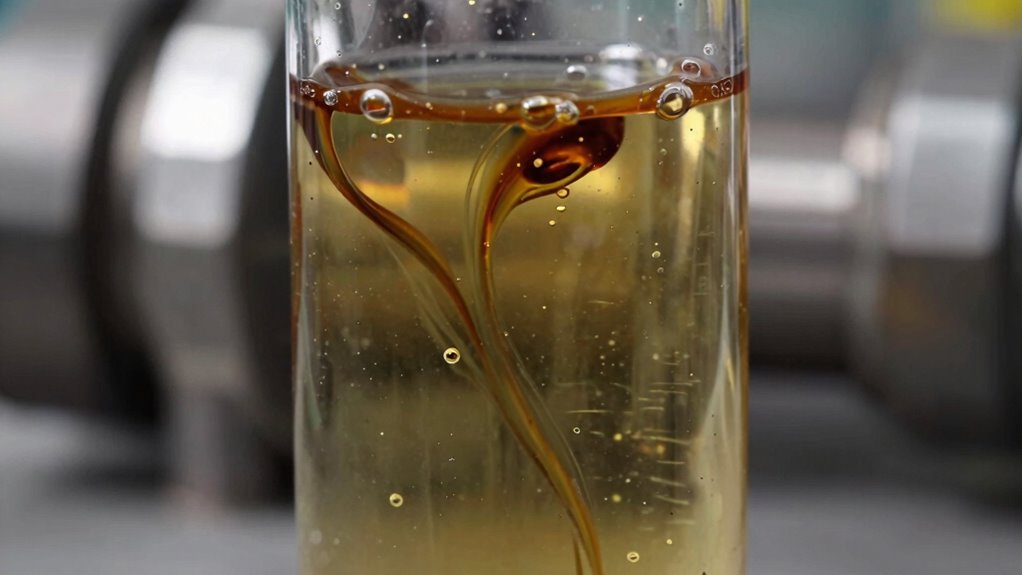
Recognizing when to consult an expert is essential because not all viscosity issues resolve with basic maintenance. If you notice persistent or severe problems, it’s time to seek professional help. You might encounter situations like:
- Unusual fluctuations in viscosity despite regular oil changes, indicating complex lubricant formulation or additive effects at play.
- Rapid deterioration of oil performance, suggesting contamination or incompatible additives affecting viscosity.
- Inconsistent shear or heat-related viscosity shifts that don’t respond to standard troubleshooting, requiring detailed analysis.
An expert can evaluate your oil’s condition, analyze lubricant formulation, and identify if additives are causing unexpected viscosity shifts. This ensures proper diagnosis and avoids costly damage or misinterpretation of the problem.
Frequently Asked Questions
Can Viscosity Changes Indicate Impending Engine Failure?
Yes, viscosity changes can indicate impending engine failure. If your oil’s viscosity drops, it suggests engine wear or contamination, which reduces its ability to protect engine parts. Conversely, increased viscosity might mean heat buildup or oil formulation issues. Monitoring viscosity shifts in your UOA helps you catch early signs of trouble, allowing you to address potential problems before they cause significant engine damage.
How Does Additive Depletion Affect Oil Viscosity?
Additive depletion reduces oil’s ability to maintain viscosity stability, causing it to thicken or thin unexpectedly. When additives like viscosity index improvers diminish, the oil’s viscosity may become inconsistent, affecting engine performance and protection. You should monitor oil analysis reports, as significant additive depletion signals that the oil may no longer provide peak lubrication. Addressing additive depletion early helps prevent wear and potential engine damage.
Is Viscosity Shift Always Detectable in Standard UOA Tests?
Viscosity shift isn’t always detectable with standard UOA tests because lab testing and field diagnostics have limitations. While they can identify significant changes, minor shifts might go unnoticed unless specialized tests are performed. Regular UOA can alert you to major issues, but for precise viscosity evaluation, consider advanced testing methods. Staying proactive guarantees you catch early signs of viscosity problems before they lead to engine damage.
What Role Does Moisture Play in Altering Oil Viscosity?
Moisture effects can substantially alter oil viscosity, especially when water contamination occurs. Water reduces lubrication efficiency and causes the oil to thin out, leading to viscosity shifts. You might notice increased engine wear or poor performance as a result. Regularly checking for water contamination helps you catch moisture effects early, preventing more serious issues. Keep an eye on oil condition, and address water contamination promptly to maintain ideal viscosity and engine health.
Can Vehicle Type Influence the Likelihood of Viscosity Shifts?
Yes, vehicle type influences viscosity shifts due to differences in engine design and driving conditions. For example, high-performance engines or those in trucks experience more heat and stress, increasing the risk of viscosity changes. Short city trips or frequent stop-and-go driving also affect oil stability. You should consider these factors during oil analysis, as they help predict potential viscosity issues and guide appropriate maintenance.
Conclusion
To keep your engine running smoothly, pay close attention to viscosity shifts—they often whisper subtle hints about underlying issues. By understanding whether shear, heat, or contamination is at play, you can gently steer your maintenance in the right direction. Remember, addressing these signs early helps prevent more serious concerns from quietly developing. Sometimes, a trusted expert’s insight can be like a guiding light, helping you navigate the quiet nuances of oil health before problems become more noticeable.