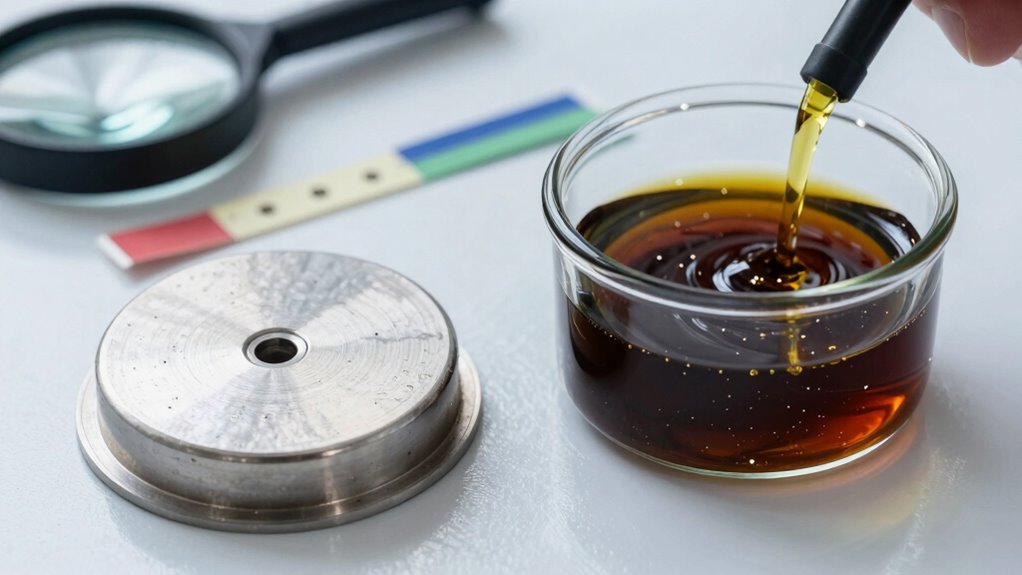

Used oil analysis for differentials helps you uncover signs of wear, contamination, and lubricant degradation that are hard to see otherwise. By examining metal particles, contaminants, and oil properties like viscosity and acidity, you can detect early gear or bearing issues before costly damage occurs. Regular testing offers vital insights into the differential’s health, allowing you to plan maintenance proactively. Keep exploring, and you’ll discover how to interpret these findings for ideal differential care.

Get business pricing on garage and car supplies
- Business-only prices and quantity discounts
- Tax-exempt purchasing
- Multiple users, one account, clear invoices
Key Takeaways
- Metal particle analysis reveals gear or bearing wear severity and types of internal damage.
- Changes in viscosity and acid number indicate lubricant degradation or contamination issues.
- Contaminant detection, like dirt or water, helps identify sealing or filtration problems.
- Particle size and composition help differentiate early wear from severe component failure.
- Regular testing enables predictive maintenance by tracking wear trends and contamination levels over time.
Products Worth Considering

Milwaukee 2697-22 M18 18-Volt Lithium-Ion Cordless Hammer Drill/Impact Driver XC Combo Kit (2-Tool)

DEWALT 20V MAX XR 1/2-Inch Cordless Impact Wrench Kit (DCF900P1)

Autel Scanner MaxiCheck MX808S – 2026 US Version Bidirectional OBD2 Diagnostic Tool
As an affiliate, we earn on qualifying purchases.
Why Differential Health Matters and How Oil Analysis Helps
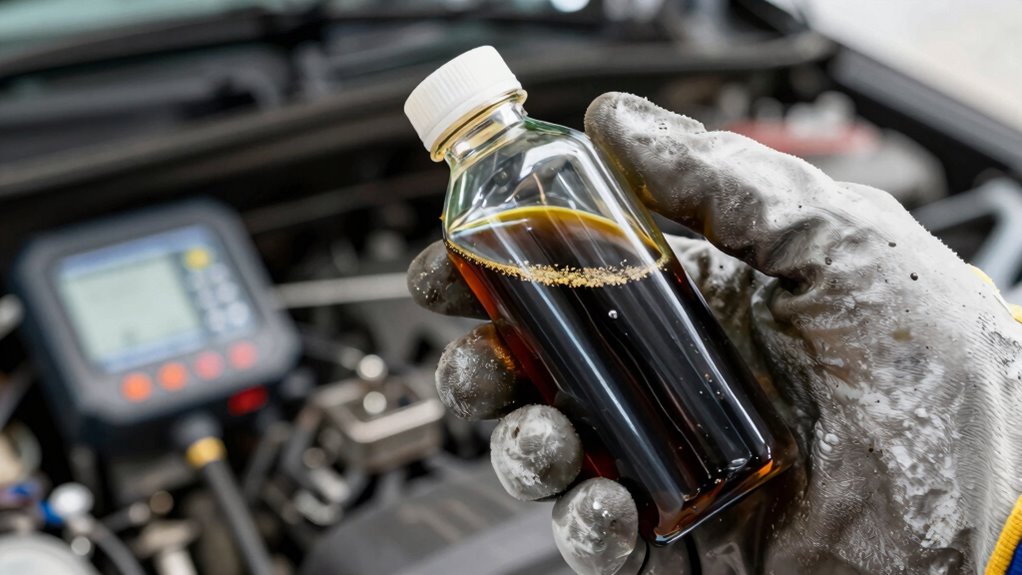
Maintaining the health of your vehicle’s differential is essential for smooth operation and preventing costly repairs. Proper lubrication is key, as the lubricant properties guarantee smooth gear movement and reduce friction. Over time, oil can degrade, losing its ability to protect the gears effectively. Oil analysis helps detect contamination sources such as dirt, water, or metal particles that can accelerate wear. These contaminants compromise lubricant properties, leading to increased friction and potential damage. Regularly checking used oil provides insight into the differential’s condition, allowing you to catch problems early before they escalate. Advanced testing methods, such as precision measurement tools, ensure accurate assessment of contaminant levels and oil quality. The presence of metal particles in the oil can indicate wear and tear within the differential components, prompting timely maintenance actions. Additionally, understanding the lubricant degradation process aids in selecting the appropriate oil change intervals. This proactive approach can significantly prevent failures, saving you money and downtime. By understanding the state of your differential’s lubricant and identifying contamination sources, you can schedule timely maintenance, extend component life, and ensure your vehicle runs reliably. Moreover, staying informed about the oil’s contamination levels helps optimize maintenance schedules and prevent unexpected failures.
What Used Oil Analysis Can Reveal About Your Differential
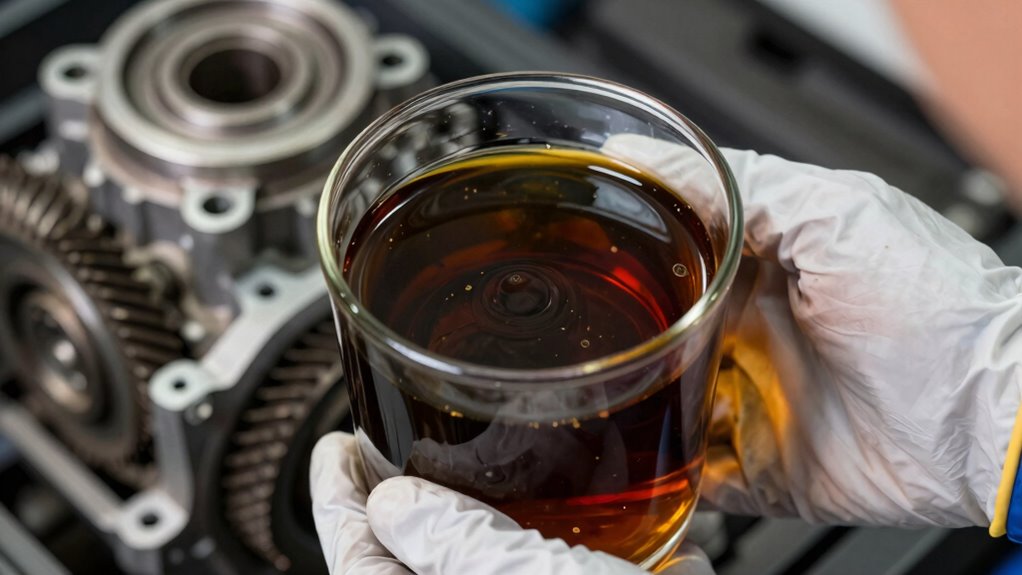
Used oil analysis provides a window into the condition of your differential, revealing critical information that isn’t visible during routine inspections. By examining lubricant properties such as viscosity, acid number, and additive depletion, you can assess how well the oil is protecting your gears. Changes in these properties indicate wear or breakdown, alerting you to potential issues before they become serious. Proper oil sample collection is essential to get accurate insights; it ensures the sample truly reflects the differential’s current state. Additionally, analyzing the oil helps you understand if contaminants are present or if the lubricant’s quality is deteriorating. This process can also help identify early signs of component wear and prevent costly repairs. Understanding the chemical properties of the oil can help identify early signs of component wear and prevent costly repairs. Regular testing can also reveal wear particles, which are critical indicators of internal component degradation. Incorporating testing procedures into your maintenance routine enhances your ability to detect issues proactively. Moreover, assessing the oil’s additive levels can provide insights into how effectively the lubricant is combating oxidation and corrosion over time.
How to Interpret Metal Particles and Contaminants in Oil Samples
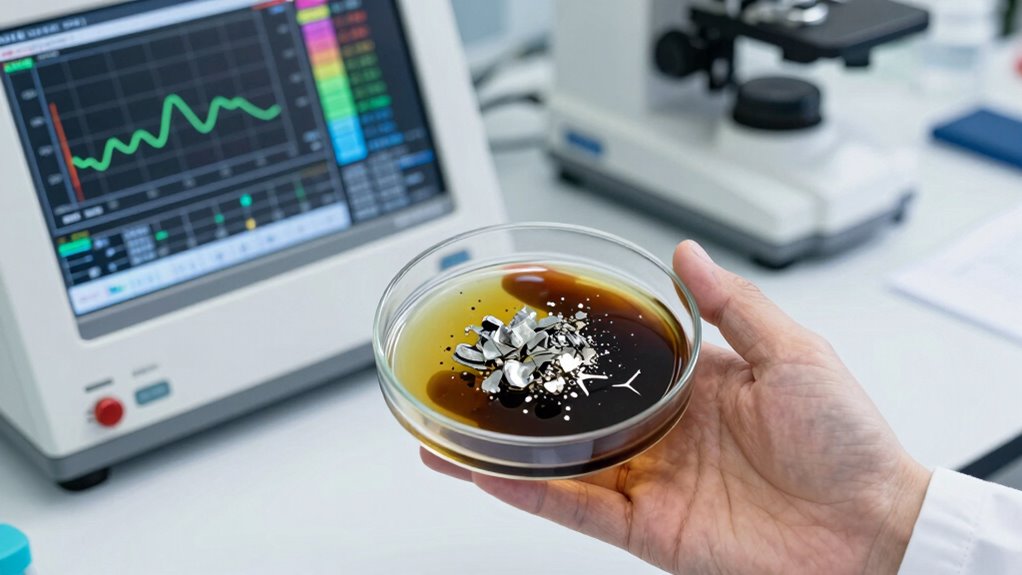
When analyzing oil samples from your differential, metal particles and contaminants can tell you a lot about its internal condition. Particle size matters—small particles often indicate early wear, while larger ones suggest severe damage. Contaminant types reveal issues like dirt, water, or debris intrusion. To interpret these elements, review particle size and composition carefully. Proper understanding can help prevent costly repairs and extend component lifespan. Here’s a quick guide:
| Particle Size | Contaminant Types | What It Indicates |
|---|---|---|
| Fine (micron scale) | Dirt, corrosion | Early wear, contamination ingress |
| Medium | Metal debris | Ongoing component wear |
| Coarse | Larger debris | Severe damage or failure |
| Any size | Water, sludge | Contamination or poor maintenance |
| Mixed | Various | Multiple issues present |
Understanding these factors helps pinpoint issues and plan maintenance effectively. Regular oil analysis can provide ongoing insights into these indicators. Recognizing the significance of particle composition can help diagnose the root causes more accurately. Incorporating knowledge of Free Floating particles can further enhance your interpretation of the data.
Detecting Gear and Bearing Damage Through Oil Diagnostics
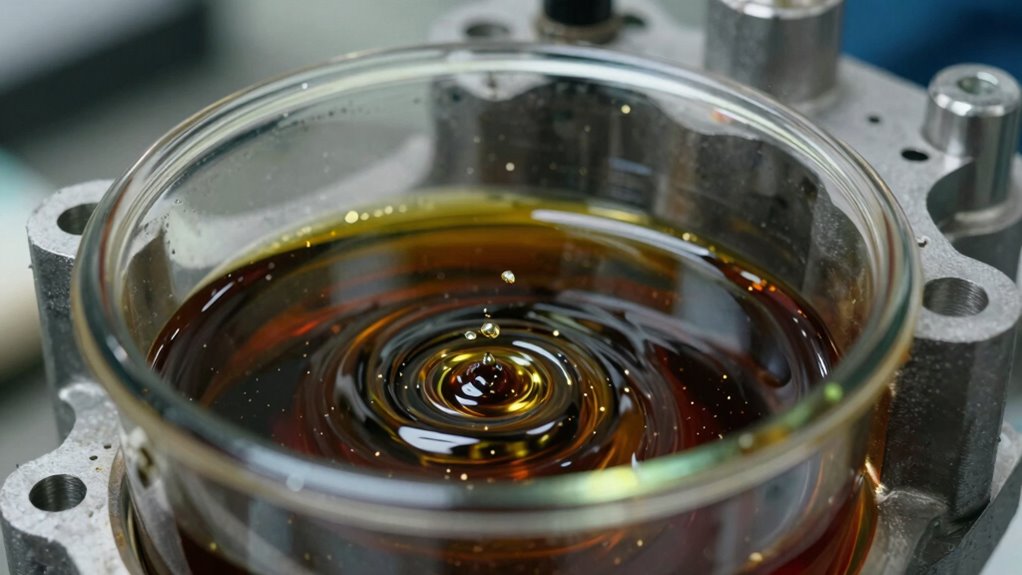
Analyzing oil samples for gear and bearing damage involves examining specific indicators that signal internal deterioration. Changes in lubricant properties, such as increased viscosity or abnormal acidity, can reveal early damage. Metal particles, especially fine and irregular ones, may indicate wear or spalling. Using advanced oil filtration techniques helps remove contaminants, providing clearer samples for accurate analysis. Proper water damage mitigation ensures that oil samples are not compromised by external moisture, leading to more reliable diagnostics. Additionally, implementing contamination control practices can significantly improve the accuracy of oil analysis results. Maintaining consistent sampling procedures and storage conditions also prevents sample contamination, ensuring that test results accurately reflect the equipment’s condition. Key indicators include:
- Elevated metal particle counts, pointing to gear or bearing wear.
- Shift in viscosity, signaling lubricant breakdown or contamination.
- Increased acid number, suggesting oxidation or corrosion.
- Presence of debris or dirt, indicating filtration issues or ingress. Regularly monitoring these factors and understanding their significance can help in predictive maintenance efforts, ultimately reducing downtime and repair costs. Proper oil sampling procedures are essential for obtaining representative samples that truly reflect the equipment’s current state. Monitoring these factors allows you to detect damage early, preventing costly failures and optimizing maintenance schedules through precise oil diagnostics.
Incorporating Used Oil Testing Into Your Maintenance Routine
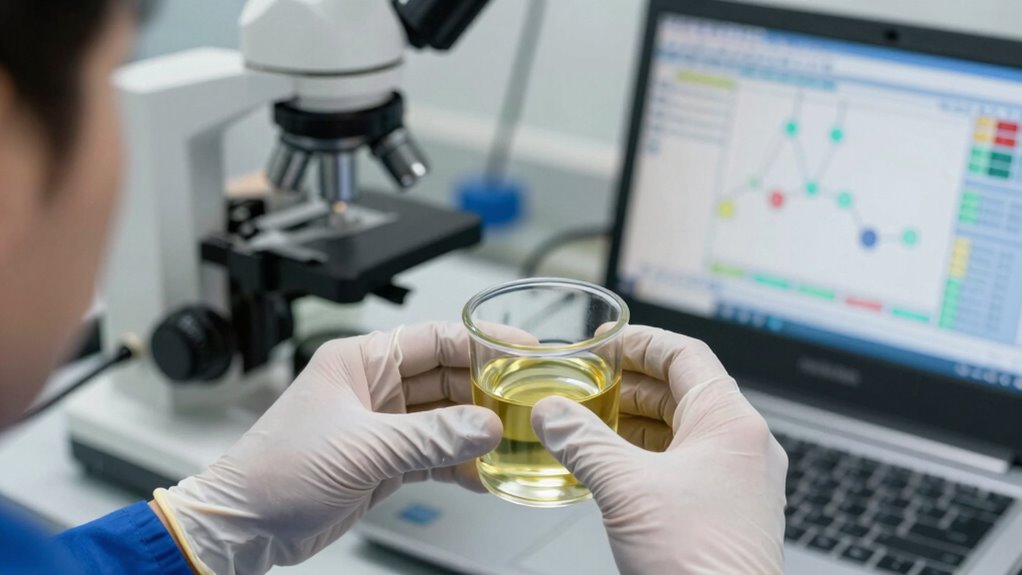
Integrating used oil testing into your maintenance routine enables you to detect potential equipment issues early and make informed decisions. Start by establishing regular oil sampling schedules based on your equipment’s operating hours or manufacturer recommendations. Consistent testing intervals ensure you catch abnormalities before they escalate, reducing downtime and repair costs. When collecting samples, follow proper procedures to avoid contamination, and choose a reliable lab for accurate analysis. Use the test results to monitor trends in contaminant levels, wear particles, and additive depletion. Incorporate these insights into your maintenance planning, scheduling oil changes or repairs proactively. By making used oil testing a routine part of your maintenance, you improve equipment longevity, optimize performance, and prevent costly failures.
Frequently Asked Questions
How Often Should Differential Oil Analysis Be Performed for Optimal Results?
You should perform differential oil analysis every 3,000 to 5,000 miles or as recommended by your vehicle’s manufacturer. Maintaining proper sampling frequency guarantees you catch issues early. Typically, analysis intervals depend on your driving habits and operating conditions. Regular testing helps you monitor oil condition, wear particles, and contamination, allowing you to plan oil changes and maintenance proactively, ultimately extending your differential’s lifespan.
What Are the Typical Costs Associated With Differential Used Oil Testing?
You’ll find that differential used oil testing costs usually range from $20 to $100 per sample, depending on how fancy your lab gets. Cost considerations include testing frequency—more often means more money, but you get better insights. Skimp on testing, and you might miss a costly failure. So, weigh the expense against the risk of breakdowns, and remember: cheap tests now save pricey repairs later.
Can Oil Analysis Predict Future Differential Failures Accurately?
Oil analysis can help predict future differential failures, but it has predictive limitations. You can identify failure precursors like metal wear and contaminant levels, yet it’s not foolproof for precise failure timing. Regular testing improves early detection, but factors like fluctuating operating conditions may still challenge accuracy. So, while useful, don’t solely rely on oil analysis for predicting failures—combine it with other maintenance strategies for the best results.
Are There Specific Oil Brands More Suitable for Differential Analysis?
Yes, when it comes to oil brand selection, some analytical oil brands are more suitable for differential analysis. Look for brands recognized for consistent quality and detailed additive package information, as these help in accurate testing. Choosing reputable analytical oil brands guarantees reliable results, making it easier to detect wear, contamination, or other issues early. Always opt for brands that specialize in oils designed for diagnostic testing to get the most precise insights.
How Does Ambient Temperature Affect the Accuracy of Oil Analysis Results?
While temperature fluctuations can subtly influence oil analysis results, they’re generally manageable if you follow proper sampling procedures. Extreme ambient temperatures may cause sample contamination or alter fluid characteristics, leading to less accurate insights. To guarantee reliability, collect samples in controlled conditions and analyze them promptly. This way, you minimize temperature-related effects, keeping your differential assessments precise and helping you make informed maintenance decisions confidently.
Conclusion
Remember, an ounce of prevention is worth a pound of cure. Regular used oil analysis keeps you ahead of potential differential issues, saving you time and money. By understanding what metal particles and contaminants reveal about your gears and bearings, you can catch problems early. Make oil testing a key part of your maintenance routine, and you’ll keep your equipment running smoothly for the long haul. Stay vigilant—your differential will thank you.