
Cold weather increases wear risk because lower temperatures cause materials like metal, rubber, and plastic to contract and become more brittle, leading to cracks and misalignments. It also thickens engine oil, reducing lubrication and increasing friction during startup. Additionally, cold weakens your battery and electrical systems, making engine starts harder and stressing components more. These effects happen even when using the same oil. To learn how to protect your vehicle in winter, keep reading.
Key Takeaways
- Cold temperatures increase oil viscosity, making it thicker and reducing its ability to lubricate engine parts effectively.
- Thicker oil causes higher engine resistance and friction during startup, raising wear risk despite using the same oil.
- Cold weather contracts metal components, altering clearances and increasing contact stresses, which accelerates wear.
- Reduced battery power in cold conditions can lead to incomplete combustion and increased mechanical stress, heightening wear.
- Material contraction in seals and components can cause leaks and misalignments, further contributing to increased wear risk.

STP Premium Synthetic Blend 4 Cycle Small Engine Oil, SAE 10w30 Motor Oil for Lawnmowers, Generators, Tractors, Snow Blowers, and More, 32 fl oz
- Engine Compatibility: Suitable for small engines like lawnmowers and generators
- Temperature Resistance: Fights thermal breakdown at high temperatures
- Engine Cleanliness: Prevents buildup and controls carbon deposits
As an affiliate, we earn on qualifying purchases.
As an affiliate, we earn on qualifying purchases.
Why Does Cold Weather Increase Car Wear and Tear?
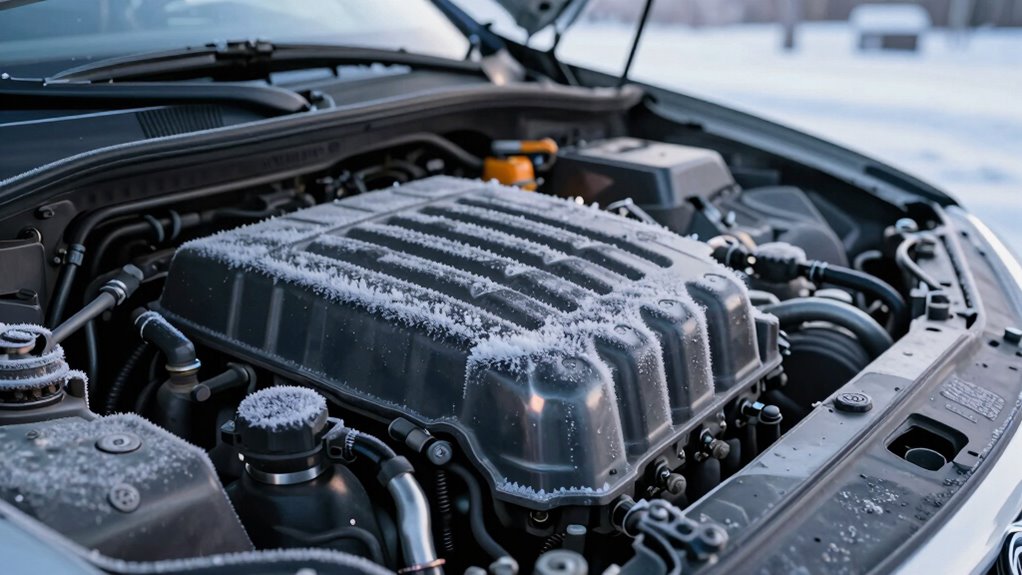
Cold weather can accelerate car wear and tear because low temperatures cause materials like rubber, plastic, and metal to become brittle and more susceptible to damage. Your tire tread, for example, hardens and loses flexibility, reducing grip and increasing the risk of punctures or uneven wear. Cabin insulation also becomes less effective as it contracts, leading to drafts and temperature fluctuations inside your vehicle. These changes put extra stress on various components, making them more prone to cracking or breaking. Over time, this can compromise safety and comfort. Recognizing how cold weather affects critical parts helps you take proactive steps, like inspecting tire tread depth and ensuring good insulation, to minimize damage and extend your car’s lifespan during winter months. Regular maintenance and awareness of auditory processing issues can also help drivers better anticipate and respond to vehicle needs during harsh weather. Additionally, the contraction of materials may affect engine performance, making it essential to monitor fluids and ignition systems more closely. Being aware of material contraction can help you understand why certain parts are more vulnerable in cold conditions. Understanding thermal expansion and contraction can guide proper maintenance practices to prevent costly repairs. Moreover, paying attention to cold start procedures can significantly reduce stress on engine components when starting in low temperatures.

GOOLOO A3 12V 3000A Portable Jump Starter with Air Compressor
- Powerful Jump Starter: 3000A for engines up to 9.0L gas, 6.5L diesel
- Extreme Weather Durability: Over 1000 charge cycles, -4°F to 140°F
- Versatile Inflation Modes: 5 inflation modes for various tires and balls
As an affiliate, we earn on qualifying purchases.
As an affiliate, we earn on qualifying purchases.
How Cold Temperatures Affect Engine Oil Viscosity and Performance
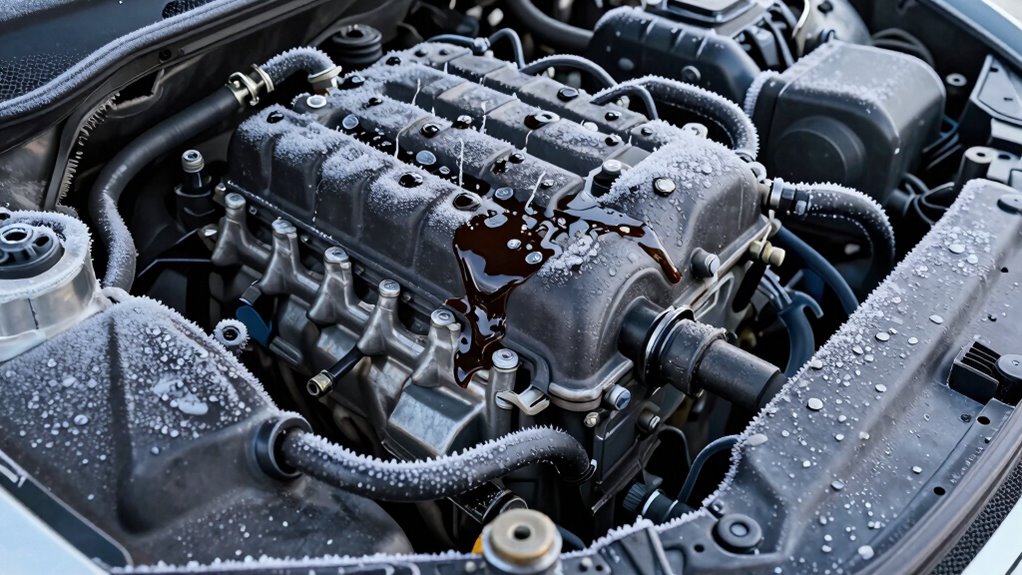
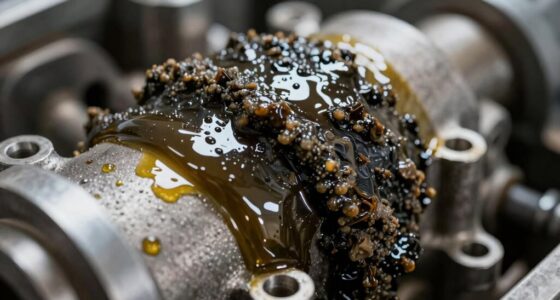
As temperatures drop, your engine oil becomes thicker and less able to flow freely through your vehicle’s engine. This increased viscosity affects how well the oil lubricates moving parts, leading to higher engine friction. When engine temperature is low, the oil doesn’t circulate smoothly, which can reduce fuel efficiency because your engine has to work harder to overcome this resistance. Thicker oil also struggles to reach critical engine components quickly, increasing wear risks over time. Using the right oil viscosity for cold weather helps maintain ideal flow and lubrication. Proper oil viscosity in cold weather ensures your engine stays protected and runs efficiently, even in low temperatures. Proper oil performance in cold weather is essential for preserving fuel efficiency and preventing unnecessary wear. Embracing the importance of engine maintenance during winter can further safeguard your vehicle against harsh conditions. Additionally, using appropriate storage for your vehicle during winter months can help prevent issues related to cold weather. Regularly checking oil levels and considering winter-specific oil formulations can also improve overall engine health during colder months. A thorough inspection of engine components can help identify potential issues caused by cold weather before they lead to more serious damage.

NASA TECH White Reflective Foam Core 2 Car Garage Door Insulation Kit 18FT (WIDE) x 8FT (HIGH) R Value 8.0 Made in USA New and Improved Heavy Duty Double Sided Tape (ALSO FITS 18X7)
- Kit Includes: 4 rolls of foam insulation and tools
- Made in USA: Meets US and international fire codes
- Heavy Duty Tape: Double sided tape with detailed instructions
As an affiliate, we earn on qualifying purchases.
As an affiliate, we earn on qualifying purchases.
How Cold Weather Makes Your Car Harder to Start and Causes More Wear
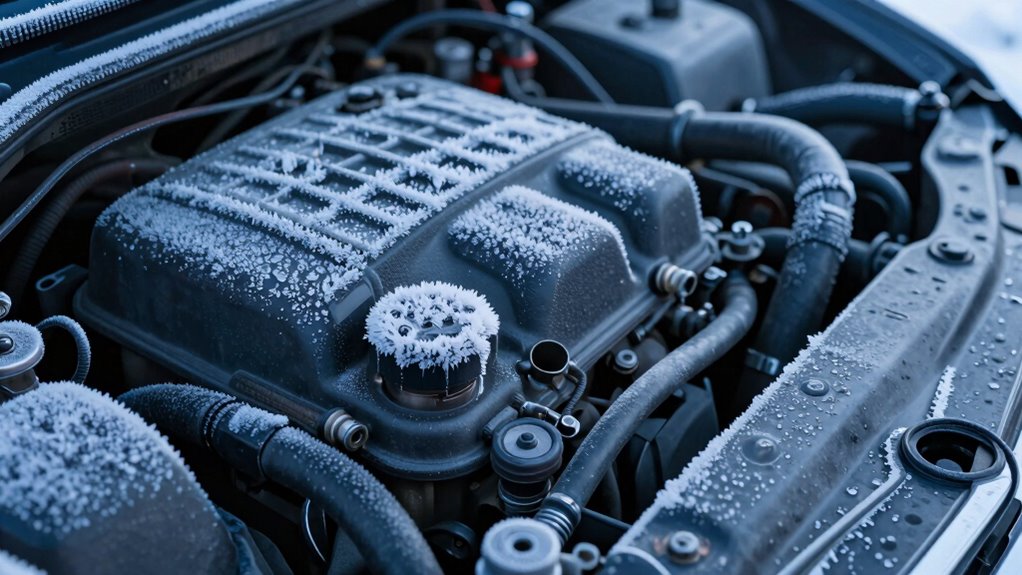
When temperatures drop, your car faces increased difficulty starting because the battery’s power diminishes and engine fluids thicken. This makes each cold start more demanding, putting extra engine stress on components that aren’t used to such strain. As a result, your battery works harder to turn over the engine, and the starter motor experiences added wear. The thickened oil resists flow, increasing engine resistance during startup. Additionally, proper maintenance can help mitigate some of these effects by ensuring your system remains in optimal condition. Regularly checking and replacing worn parts can prevent damage caused by these temperature-related stresses. Cold weather effects can also cause material contraction, which impacts sealing and component fit, further contributing to wear. Here’s a quick look at what happens:
| Cold Start Effect | Impact |
|---|---|
| Reduced battery power | Harder to turn the engine over |
| Thicker engine fluids | Increased engine stress |
| Higher starter motor load | Faster wear and potential failure |
| Longer warm-up periods | More engine wear over time |

Tire Tread Depth Gauge,Tire Tread Gauge Color Coded,Tread Depth Gauge in 1/32 inch(Pack of 2)
- Color Coded Tread Depths: Different colors indicate different tread ranges
- Accurate and Fast Reading: Easy calibration for quick measurements
- Reusable and Durable: Made of sturdy material for long-term use
As an affiliate, we earn on qualifying purchases.
As an affiliate, we earn on qualifying purchases.
How Cold Temperatures Impact Lubrication, Friction, and Internal Engine Parts
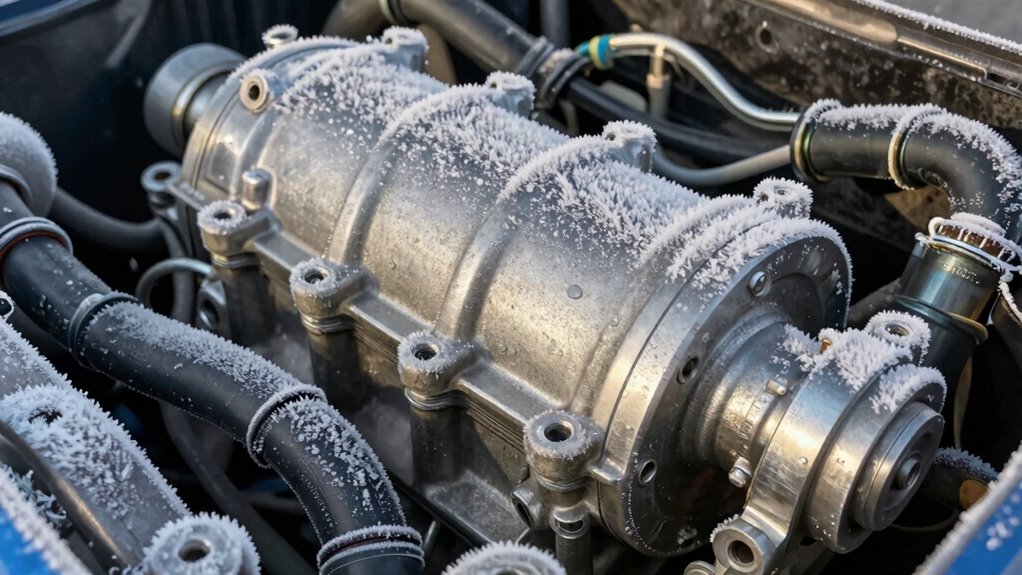
When temperatures drop, your engine oil thickens, making it harder to circulate and lubricate parts properly. This increased viscosity leads to more friction inside the engine, putting extra stress on components. Additionally, cold causes metal parts to contract, which can affect how smoothly everything moves. Using the right oil viscosity can help mitigate these issues and maintain engine performance in cold weather. Being aware of thermal contraction and how it influences engine parts can further help in choosing appropriate lubricants for winter conditions. Recognizing the importance of proper lubrication ensures that engine parts are protected against the stresses caused by low temperatures.
Oil Viscosity Changes
Cold temperatures cause engine oil to thicken, which can markedly affect lubrication and engine performance. As oil viscosity increases, it flows more slowly, making it harder for the oil to reach critical engine parts. This reduced flow hampers engine lubrication, increasing wear risks. To understand this better, consider:
- Thicker oil creates more resistance, forcing the engine to work harder.
- Reduced oil flow can lead to insufficient lubrication during startup.
- Viscosity changes can cause uneven oil film formation, exposing parts to metal-on-metal contact.
- Cold-induced thickening emphasizes the importance of choosing the right oil for winter conditions.
- Proper maintenance and using seasonally appropriate oil can help mitigate these issues and protect your engine during colder months.
- Additionally, understanding how oil viscosity affects engine wear helps in selecting the best lubrication for different climates. Regular oil change intervals are also crucial to maintain optimal performance.
- Regularly checking oil level and quality ensures optimal performance and reduces the risk of damage caused by cold weather.
- Recognizing the impact of temperature on oil performance can inform better engine care practices during winter.
Increased Friction Levels
As temperatures drop, the lubricating properties of engine oil diminish, leading to increased friction between moving parts. This heightened friction isn’t limited to the engine; it can also affect tire traction, as cold conditions cause rubber to harden and grip less effectively. When tires lose traction, your vehicle becomes more prone to slipping, adding stress to internal components. Additionally, cabin insulation struggles to retain heat in colder weather, making engine parts work harder to maintain ideal temperature, which amplifies wear. Moreover, cold temperatures can cause oil to thicken, further reducing lubrication efficiency and increasing internal component wear. The viscosity of engine oil is crucial because it determines how well the oil flows at different temperatures, directly impacting lubrication. The combined effect of reduced lubrication and increased resistance means internal engine parts face more friction, accelerating wear and tear. Recognizing these factors highlights why cold weather demands extra attention to vehicle maintenance and preparedness. Proper engine oil viscosity plays a crucial role in mitigating some of these effects during cold months. Additionally, cold weather can impact hydraulic systems, causing them to operate less smoothly and potentially increasing internal stress.
Engine Component Contraction
Lower temperatures cause engine components to contract, which can disrupt the lubrication process and increase internal friction. This engine component contraction reduces the gaps between parts, making them tighter and less able to move freely. As the metal cools, thermal expansion reverses this process when it warms up, but cold conditions can leave parts stuck or misaligned. This contraction can lead to increased wear over time if parts don’t expand properly when heated. To understand this better:
- Tightened clearances hinder oil flow, causing poor lubrication.
- Increased contact between metal surfaces raises friction.
- Reduced flexibility makes components more prone to cracking.
- Improper thermal expansion can cause misalignment and accelerated wear.
- Metal contraction can also affect the overall integrity of engine assemblies, leading to potential damage if not properly managed.
Being aware of these effects helps you prevent damage during cold weather.
How Oil Thickness in Cold Weather Influences Engine Wear Risks
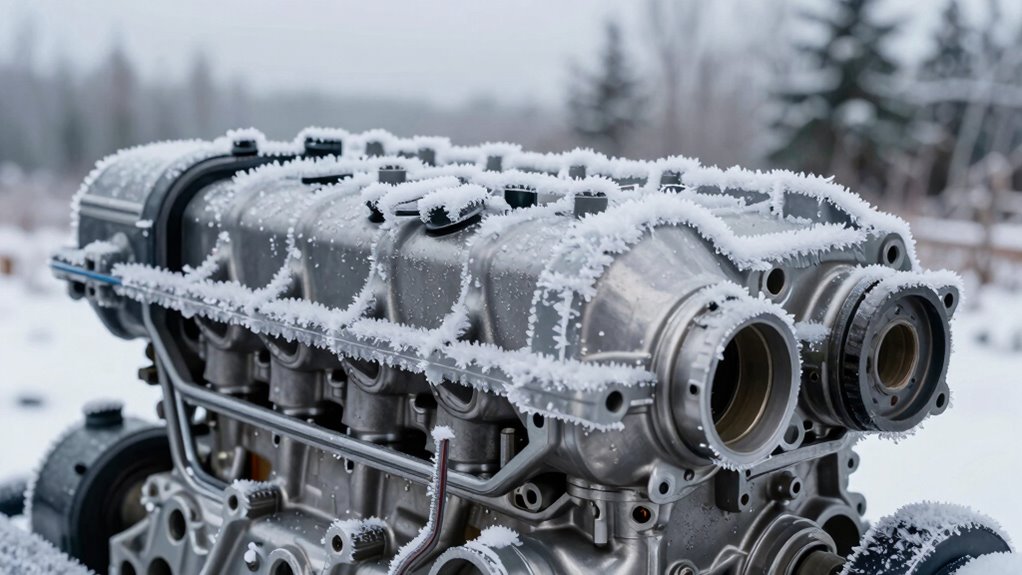
When temperatures drop, engine oil thickens, which can considerably increase wear risks. Thicker oil moves more slowly, reducing oil flow to critical engine parts during startup. This sluggish flow means essential components like pistons and camshafts aren’t adequately lubricated, increasing friction and wear. Additionally, thick oil hampers filter efficiency; it can clog or slow down the filter, preventing debris from being removed effectively. Poor filter performance allows contaminants to circulate within the engine, accelerating wear and potential damage. Because cold oil resists flow and filtration becomes less effective, your engine faces higher risks of premature wear, especially during initial startups. Ensuring the right oil viscosity for cold weather helps maintain proper oil flow and filter efficiency, safeguarding your engine’s longevity.
Why Cold Weather Strains Your Car’s Battery and Electrical System
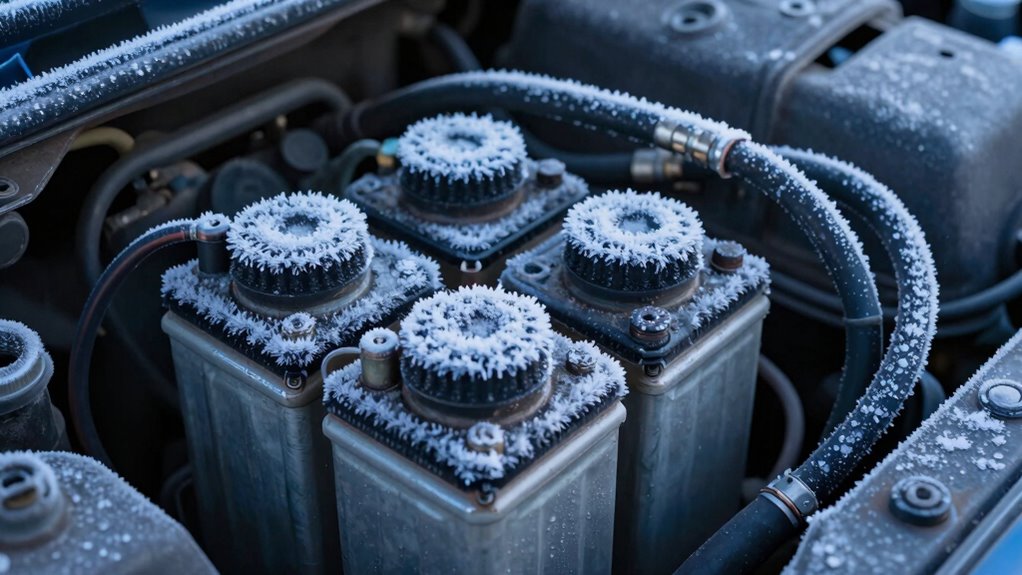
Cold weather puts extra strain on your car’s battery and electrical system because low temperatures reduce the battery’s ability to produce and store charge. When it’s cold, your battery’s chemical reactions slow down, weakening battery health and lowering electrical performance. This makes starting your car harder and can cause electrical components to underperform. To protect your system, consider these points:
- Cold temperatures decrease battery capacity, risking unexpected breakdowns.
- Reduced electrical performance affects your vehicle’s electronics and sensors.
- Cold starts demand more power, stressing the battery further.
- Poor battery health from age or wear worsens cold-weather issues.
Understanding these factors helps you maintain a reliable electrical system and avoid being stranded in freezing conditions.
How Cold Climate Affects Tire Pressure and Suspension Wear
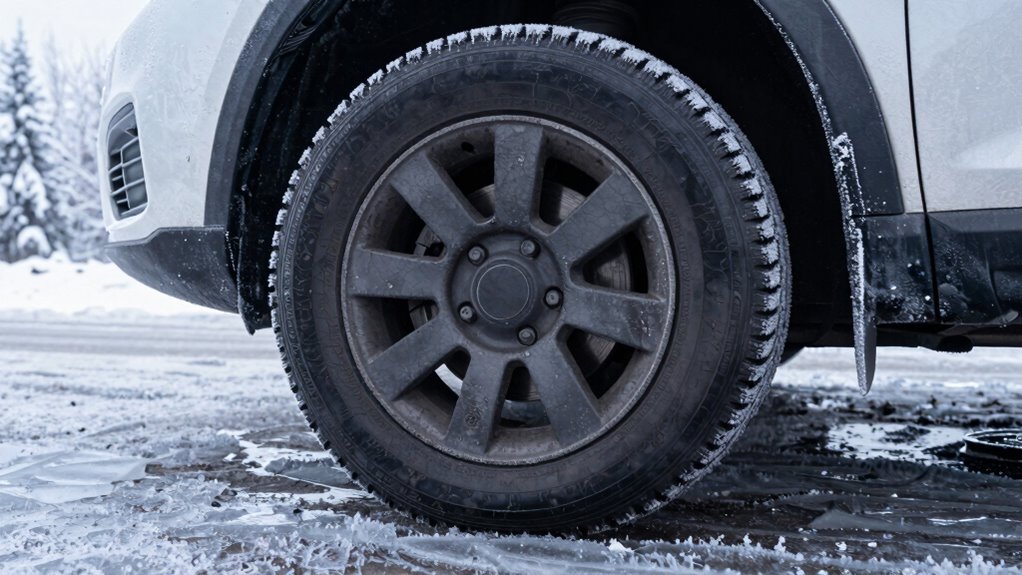
When temperatures drop, your tire pressure decreases, which can lead to less traction and poorer fuel efficiency. The cold also causes suspension components to contract, potentially affecting ride comfort and handling. These changes increase the risk of uneven wear and faster deterioration of your vehicle’s suspension system.
Tire Pressure Drops
As temperatures drop, your tires naturally lose pressure because the air inside them contracts. This reduction in tire pressure can lead to uneven tread wear, decreasing your tire’s lifespan and safety. Under-inflated tires not only compromise grip but also increase the risk of punctures. To understand the impact better, consider these points:
- Lower tire pressure causes the sidewalls to flex more, accelerating tread wear.
- Reduced pressure affects handling, making steering less responsive.
- Under-inflation increases rolling resistance, reducing fuel efficiency.
- Consistently low tire pressure can cause premature tire replacement costs.
Monitoring and maintaining proper tire pressure during cold weather ensures even tread wear and peak performance, keeping you safer on the road.
Suspension Material Contraction
Lower temperatures cause suspension components made of rubber and metal to contract, which can lead to increased wear and reduced performance. This suspension contraction results from material shrinkage as these parts cool down, making them less flexible and more brittle. When rubber components shrink, they lose elasticity, potentially causing gaps or misalignments in the suspension system. Metal parts, such as springs and shock absorbers, also contract, which can affect their ability to absorb shocks effectively. Over time, repeated contraction and expansion accelerate wear, weakening suspension parts and increasing the risk of failure. Recognizing how cold climate influences suspension material shrinkage helps you understand why your suspension system may feel less responsive and more prone to damage during winter months.
Increased Wear Risks
Cold temperatures cause tire pressure to drop because air contracts in colder weather, leading to underinflated tires. This increases the risk of uneven tire wear and suspension strain. When tires are underinflated, your suspension components work harder, accelerating wear. Additionally, cold start challenges strain your engine oil, causing faster degradation and reducing lubrication efficiency. This can lead to increased engine wear and decreased performance. To avoid these issues, check tire pressure regularly and ensure proper inflation. Also, use appropriate oil for winter conditions to minimize engine oil degradation during cold starts. Proper maintenance helps prevent accelerated suspension and engine wear, keeping your vehicle safer and extending its lifespan in cold climates.
Practical Tips to Protect Your Car During Cold Months
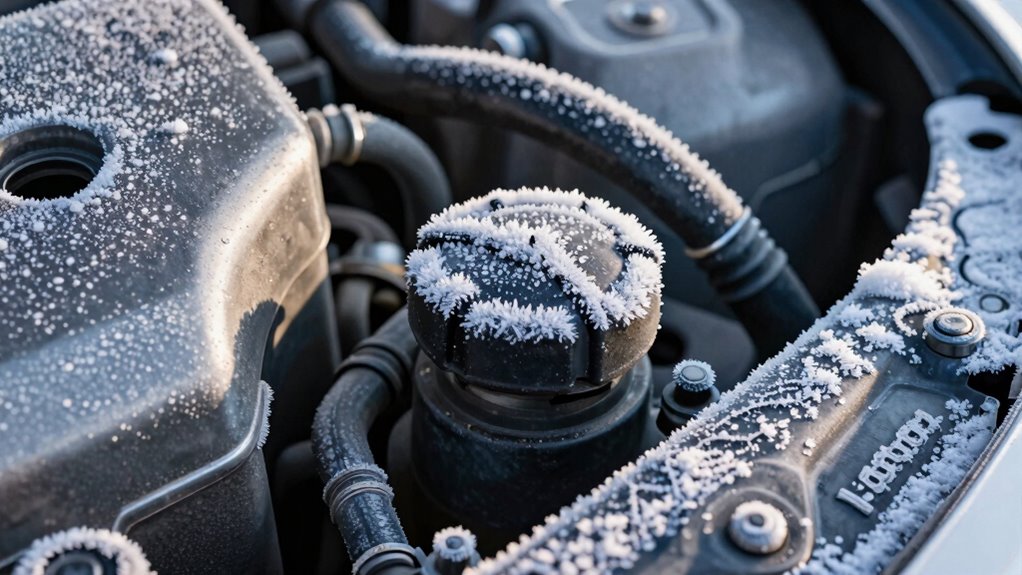
Winter conditions can take a toll on your vehicle, but taking proactive steps can prevent costly damage. To protect your car during cold months, start by keeping your fuel tank at least half full. This helps prevent fuel lines from freezing and improves fuel efficiency, saving you money. Regularly check your tire pressure, as it drops in cold weather, affecting handling and safety. Keep your windshield washer fluid topped up with a winter formula to ensure clear visibility. Additionally, consider using a remote starter or parking in a garage to maintain cabin comfort and prevent frost build-up. These simple steps not only safeguard your car from cold-related wear but also keep you comfortable and safe during winter drives.
When to Use Cold-Weather Motor Oil for Better Protection
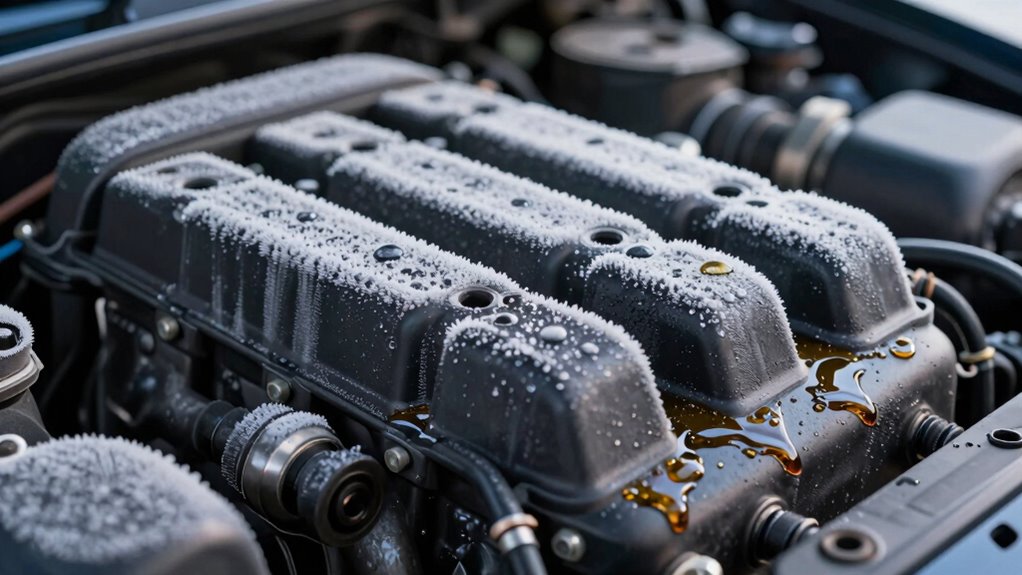
Choosing the right motor oil is essential for maintaining your vehicle’s performance in chilly conditions. Cold-weather motor oil is designed to flow better at low temperatures, providing ideal protection when starting your engine. Use it when temperatures drop below 40°F (4°C) to prevent increased wear and ensure smoother operation. Consider switching to cold-weather oil if you have an alternative fuel vehicle, as its unique engine demands may require specialized lubrication. Additionally, if your vehicle’s aerodynamics are optimized for warmer climates, cold oil helps compensate for the increased strain during cold starts.
Here are four key moments to switch:
- When temperatures fall consistently below 40°F (4°C)
- During winter months in colder climates
- If your vehicle is used mainly in cold conditions
- When operating an alternative fuel vehicle in winter
Frequently Asked Questions
Does Cold Weather Require Different Engine Oil Types?
Yes, cold weather does require different engine oil types. When temperatures drop, you need oil with lower viscosity so it flows easily at start-up, reducing engine strain. Using the right oil viscosity helps maintain ideal engine performance and protects components from wear. If you stick with summer-grade oil, it may thicken in cold, making starting harder and increasing wear risks. Always check your owner’s manual for the recommended winter oil.
How Often Should I Check Tire Pressure in Winter?
You should check your tire pressure at least once a month during winter driving. Cold temperatures cause air to contract, lowering pressure and increasing the risk of unsafe driving conditions. Regular tire maintenance helps you maintain proper inflation, improving traction and fuel efficiency. Don’t forget to check your tire pressure before long trips or after drastic temperature drops to stay safe and guarantee peak performance throughout the winter.
Can Cold Temperatures Cause Engine Oil to Freeze?
Think of your engine oil like honey in winter—cold temperatures can cause it to thicken or even freeze if it hits its freezing point. Cold weather doesn’t typically freeze engine oil unless temperatures plummet extremely low, but it does raise its viscosity considerably. When oil thickens, it struggles to flow, making startup harder and increasing wear. So, in very cold conditions, monitor your oil’s viscosity and consider using a lower viscosity oil for better protection.
What Are the Signs of Increased Engine Wear in Winter?
In winter, you might notice engine stress signs like rough idling or unusual noises, indicating increased wear. Changes in oil viscosity can cause poor lubrication, leading to faster engine deterioration. You could also see reduced fuel efficiency or longer startup times. Pay attention to your dashboard warning lights and listen for knocking sounds, as these are clear signs that cold weather has heightened your engine’s wear risk.
Is Synthetic Oil Better for Cold Weather Conditions?
Think of synthetic oil like a superhero cape that stays flexible in freezing weather. It’s better for cold conditions because of its superior synthetic advantages and stable oil viscosity, which helps your engine start smoothly. Unlike conventional oil, synthetic flows quickly and protects engine parts from wear. So, if you’re braving winter’s chill, choosing synthetic oil keeps your engine running reliably, even when temperatures drop far below freezing.
Conclusion
As winter’s chill settles in, your car becomes a delicate dance against icy forces. Cold weather thickens your oil and strains your battery, turning your vehicle into a stubborn beast if unprepared. But with the right precautions, you can keep it humming like a well-oiled machine. Think of your car as a resilient explorer—facing the cold with armor and care, ready to conquer winter’s icy grip without missing a beat.